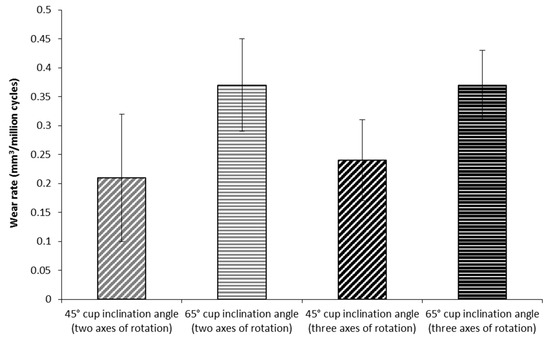
Although com shows lower wear rates than mom in vitro wear testing of com shows widely varying results.
Ceramics wear rate.

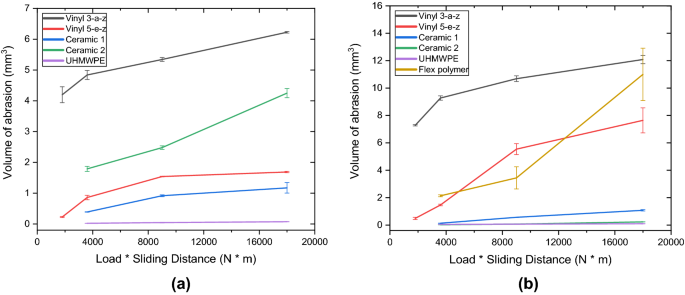
Hence the standard wear coefficient value obtained from a volume loss versus distance curve is a function of the sliding distance.
Identifying the run in and steady state wear rates was a valuable step in processing the ceramic wear data and assessing its reliability.
This may be related to limitations of wear measuring methods.
The friction and wear of ceramic ceramic and ceramic metal combinations in sliding contact the tribological characteristics of ceramics sliding on ceramics are compared to those of ceramics sliding on a nickel based turbine alloy.
The wear rate per unit sliding distance in the transient wear regime decreases until it has reached a constant value in the steady state wear regime.
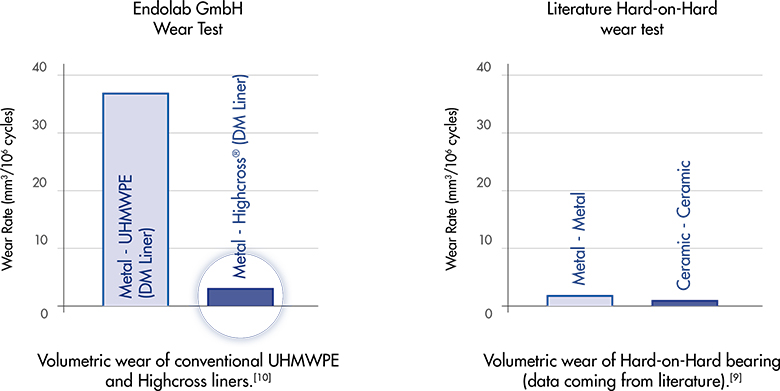
Thus the m m and c c thrs have demonstrated two to three orders of reduction in volumetric wear in the laboratory compared with the pe wear standard which helps to explain the excellent wear performance and.
The friction and wear of oxide ceramics and silicon based ceramics in air at temperatures from room ambient to 900 c in a few cases to 1200 c were measured for a.
The wear depth of pins was calculated by.
The head wear rate alone is about 100 to 300 fold lower.
The hip joint.
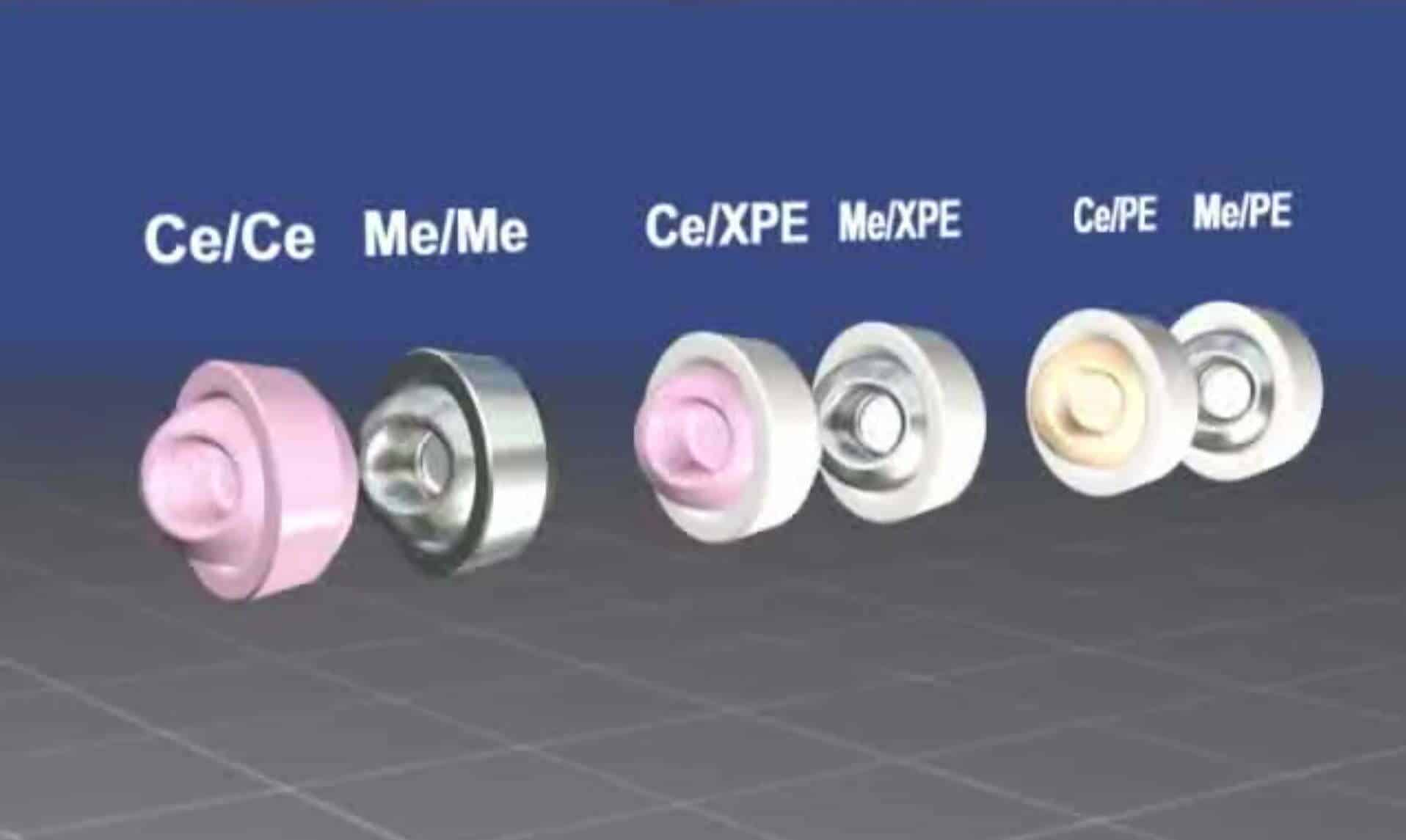
Ceramic on metal com bearings are considered to be a promising alternative to polyethylene based bearings or hard on hard bearings ceramic on ceramic coc and metal on metal mom.
Wear of ceramics and cermets.
The total wear rates of the cup and the head of ceramic on ceramic couples are about 35 fold lower than those of metal on metal.
The wear rate of al 2 o 3 13 tio 2 ceramic coating was evaluated by the wear volume and that of pins by weighing them before and after the tests.