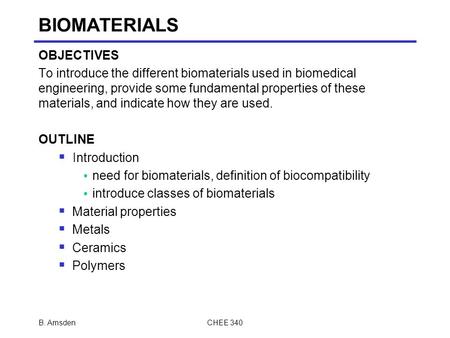
Examples of biomaterials include metals ceramics glass and polymers.
Ceramics biomaterials definition.
Ceramics used as biomaterials to fill defects in tooth and bone to fix bone grafts fractures or prostheses to bone and to replace diseased tissue are called bioceramics.
The ceramic particulate reinforcement has led to the choice of more materials for implant applications that include ceramic ceramic ceramic polymer and ceramic metal composites.
2 to reinforce the concept that ceramics and.
With the application of regenerative medicine lost and damaged tissues can be replaced or enhanced with materials of both organic and inorganic origin.
Bioactive glasses are considered biocompatible but there still is much unknown about how these glasses interact with the immune system.
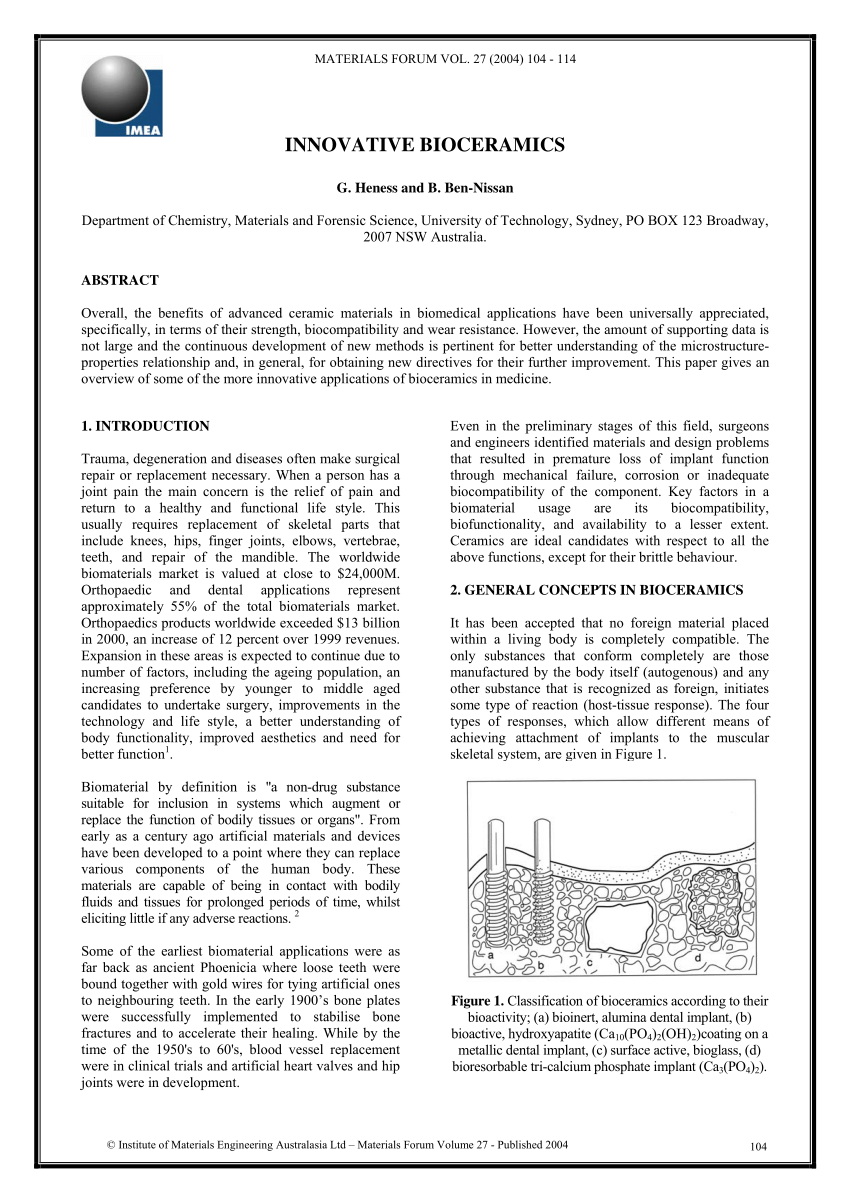
Bioceramics range in biocompatibility from the ceramic oxides which are inert in the body to the other extreme of resorbable materials which are eventually replaced by the body after they have assisted repair bioceramics are used in many types of medical procedures.
Ceramic is defined as synthesized inorganic solid crystalline materials excluding metals.
These biomaterials are grouped into bioinert ceramics as alumina and zirconia bioactive glasses and glass ceramics and bioresorbable calcium phosphates based materials.
Such materials include metal alloys ceramics polymers and biocomposites and when used for biomedical purposes they are called biomaterials biomaterials are defined by their function.
1 to alert practitioners to the fact that the use of ceramics since the very beginning always represented the adoption of high technology versus craft art.
Ceramics in dentistry where did this stuff come from.
The bioceramics concepts namely physicochemical mechanical and biological properties and respective applications in diverse fields of tissue engineering are discussed in.
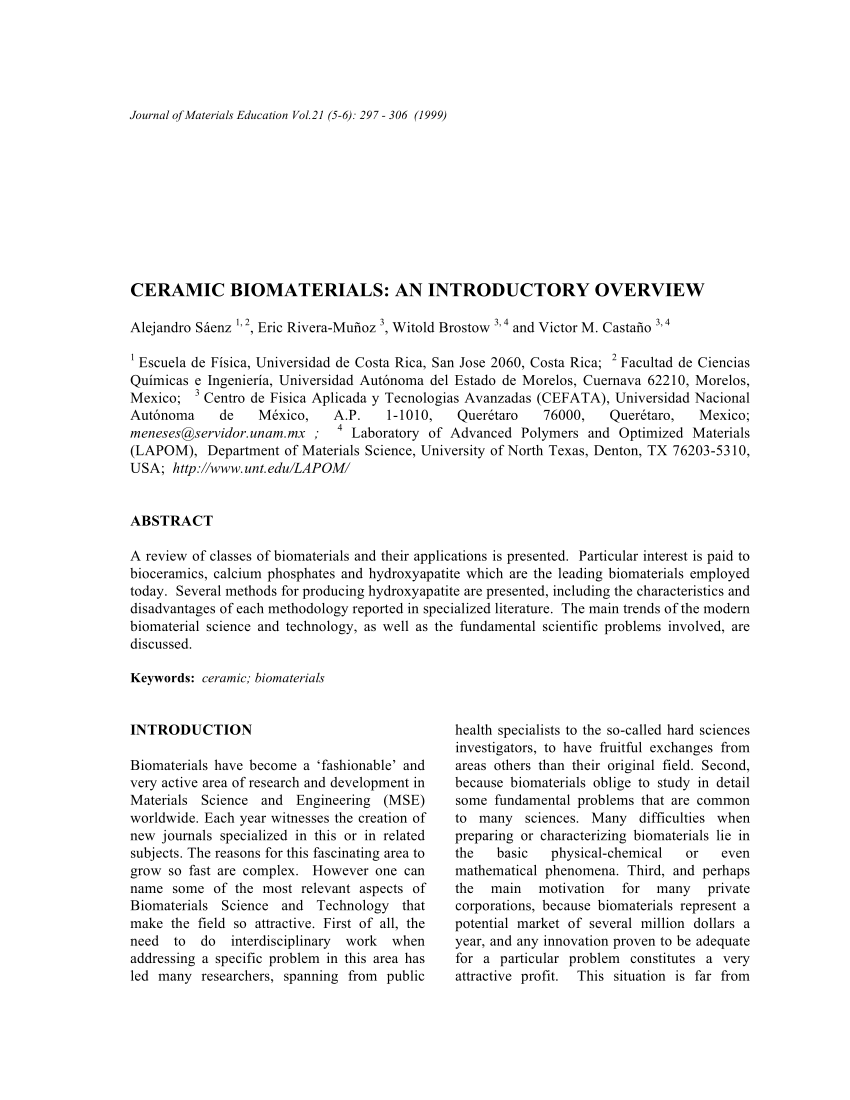
Bioceramics are an important subset of biomaterials.
Ceramic biomaterials bioceramics the class of ceramics used for repair and replacement of diseased and damaged parts of the musculoskeletal system are referr slideshare uses cookies to improve functionality and performance and to provide you with relevant advertising.
Glass ceramics elicit osteoinductiveproperties while calcium phosphate ceramics also exhibit non toxicity to tissues and bioresorption.
It is quite useful reviewing how and why ceramics came to be used in dentistry.
In a recent open access study researchers in germany explored how ions released during bioactive glass dissolution affect dendritic cells a specialized immune cell that plays a crucial role in initiating primary immune responses.
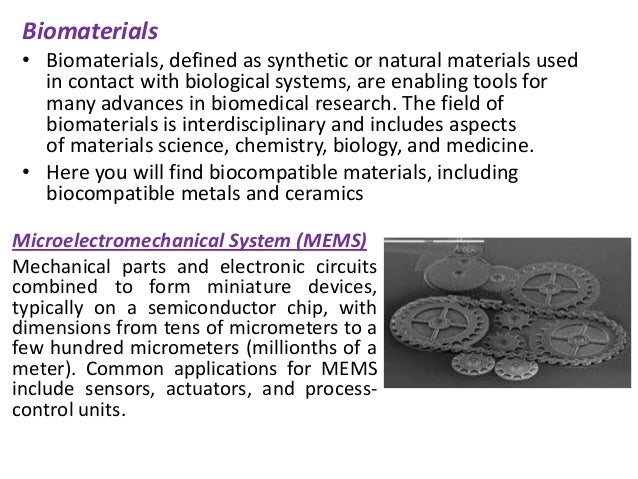
Biomaterials can be derived either from nature or synthesized in the laboratory using a variety of chemical approaches utilizing metallic components polymers ceramics or composite materials they are often used and or adapted for a medical application and thus comprises whole or part of a living structure or biomedical device which performs augments or replaces a natural.